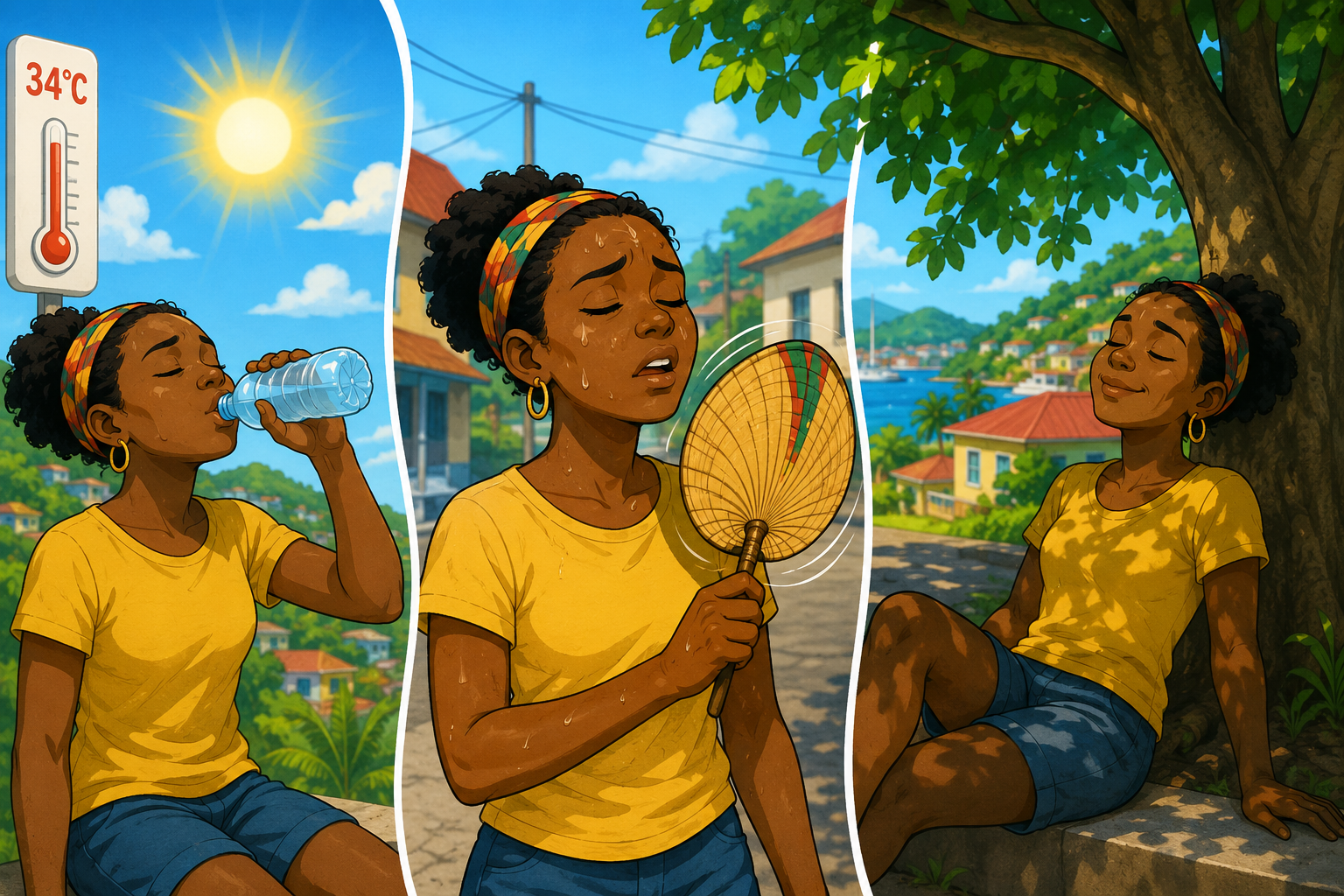
There are few things more powerful than standing beneath the shade of a large tree on a hot Caribbean afternoon. The cool breeze, rustling leaves, and natural relief from the sun remind us that nature has long provided solutions for comfort and survival.
Yet across many communities, trees are steadily disappearing, replaced by concrete yards, paved surfaces, and expanding buildings. While development is important, we must ask what we are losing in the process.
Trees are among the most valuable assets in any community. They absorb carbon dioxide, release oxygen, reduce soil erosion, help manage stormwater, and support biodiversity by providing habitats for wildlife. Just as importantly, they cool the environment naturally, reducing surrounding temperatures and making outdoor spaces more livable.
This became especially clear during the intense heat of August 2025, when temperatures in Grenada reached about 34°C at the Maurice Bishop International Airport. Many people relied heavily on fans, air conditioning, and cold drinks to cope. Yet the difference between shaded and unshaded areas was striking—beneath trees, conditions were noticeably cooler, while concrete spaces trapped and radiated heat long after sunset. Trees are not just part of the landscape; they
are essential climate infrastructure.
Despite this, a growing concern is the practice of clearing entire lots before construction begins, removing every tree regardless of its value. This results in the loss of decades of natural growth in a matter of hours. Mature trees cannot be quickly replaced. Their cooling effects, carbon storage, and ecological benefits take decades to restore.
Fortunately, a better approach exists. Tree-centric design is an emerging way of building that protects and integrates existing trees into development. Instead of seeing trees as obstacles, they are treated as assets that enhance homes and communities. Buildings can be designed around them, preserving shade, improving comfort, reducing energy costs, and maintaining the natural character of a space.
Imagine communities where trees are preserved during development, where homes are cooler, streets are greener, and people can gather comfortably outdoors. This is not a distant dream—it is a practical choice we can make today.
We all have a role to play. Plant trees in our yards, schools, and workplaces. Support tree-planting initiatives. Advocate for the protection of mature trees during construction. Encourage planning that keeps nature at the center of development. The trees planted today may take years to fully mature, but their benefits will last for generations.
We may not always sit under their shade, but others will.
The next time you feel the cool relief of a tree on a hot day, remember it is doing far more than providing shade—it is cooling the community, cleaning the air, and protecting the environment.
There is a saying that the best time to plant a tree was years ago. The second-best time is today.
Plant a tree. Protect a tree. Build with nature, not against it.